MB Homestead Services logo MB Homestead ServicesTrees · Lawns · Land (571) 921-2728
Home
Tree Work
Tree Removal Tree Pruning & Arborist Care Stump Grinding
Lawn
Annual Lawn Program Mowing & Property Maintenance Aeration & Overseeding
Land & More
Landscaping & Planting Irrigation & Drainage Bush Hogging & Snow
Company
The Annual Lawn Program Service Areas Our Story Free Estimate
On the land this month: Get on the schedule
Home / Tree Pruning & Arborist Care
Tree Work

Tree Pruning & Arborist Care

Good pruning is invisible for years and pays off for decades. Bad pruning is forever. Ours is done to ANSI A300 standards by a certified arborist.

Pruned properly, to the industry standard

ANSI A300 is the national specification for how trees should be pruned: where cuts are made, how much live crown can come off, and what stays. Every pruning job we do follows it, and the person making those calls is Pierre Melton, ISA Certified Arborist MA-5911A. That is the difference between a tree that closes its wounds and thrives, and the topped, stubbed trees you see failing all over Northern Virginia.
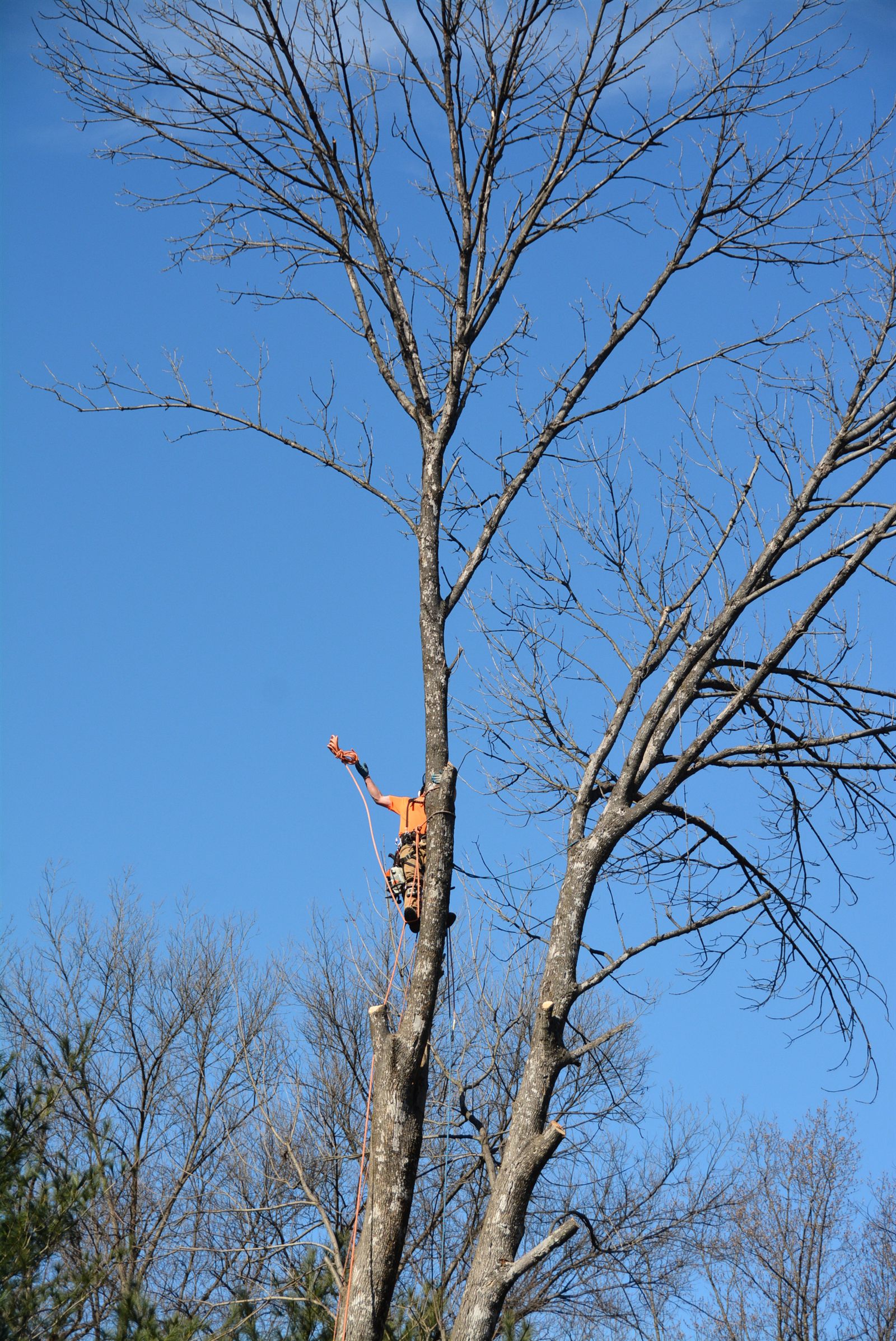
What we prune for

  • Safety. Deadwood over roofs, walkways, driveways, and play areas.
  • Clearance. Limbs off the house, the shed, and the driveway, without ruining the tree's form.
  • Structure. Young shade trees trained early grow into strong mature trees. This is the cheapest tree care you will ever buy.
  • Health. Crown cleaning that removes dead, rubbing, and diseased wood.
  • Fruit and ornamentals. Crapemyrtles handled correctly, no "crape murder."

Cabling and bracing

Mature oaks and maples with split trunks or heavy co-dominant leaders can often be saved with a properly installed support system instead of removal. It preserves shade, property value, and a tree that took eighty years to grow.

When to prune in Virginia

Winter dormancy is prime time for most hardwoods, when structure is visible and disease pressure is low. Deadwood and hazards, though, should come out whenever they are found. Spring flowering trees wait until after bloom. If you are not sure, ask, the assessment is free.

Free estimate, fast

Call or text a photo of the job. We'll take a look and get you a straight answer.

Call (571) 921-2728 Text a photo
Straight answers

Questions we hear a lot

What does an ISA Certified Arborist actually do differently?
Certification through the International Society of Arboriculture requires documented experience and passing an exam on tree biology, pruning standards, and risk assessment, plus continuing education to keep it. In practice it means pruning decisions are made from how trees actually respond to cuts, not habit.
Is topping a tree ever okay?
No. Topping creates weakly attached regrowth, decay at every stub, and a more dangerous tree in five years. It is specifically what the ANSI A300 standard exists to prevent. If someone quotes you a topping job, keep your money.
How often should trees be pruned?
Mature shade trees typically benefit from a professional look every 3 to 5 years. Young trees are best trained with light structural pruning every 2 to 3 years while corrections are still small and cheap.
Can you save a tree that has split or has a bad lean?
Sometimes, with cabling, bracing, or reduction pruning, and sometimes no. The honest answer requires eyes on the tree. Text a photo to (571) 921-2728 and you will have an arborist’s read on it, free.

Get a straight answer about your property.

Free estimates. A certified arborist looks at every request, not a call center. Call, text a photo, or send the form.
Call now Free estimate